

We are committed to sharing unbiased reviews. Some of the links on our site are from our partners who compensate us. Read our editorial guidelines and advertising disclosure.
5 Best Business Plan Software and Tools in 2026 for Your Small Business

 9 min read
A business plan can do a lot for your business. It can help you secure investors or other funding. It can give your company direction. It can keep your finances healthy. But, if we’re being honest, it can also be a pain to write.
Luckily, you don’t have to start from scratch or go it alone. Business plan software and services can help you craft a professional business plan, like our top choice LivePlan, which provides templates, guidance, and more.
You’ve got quite a few choices for business plan help, so we’re here to help you narrow things down. Let’s talk about the best business plan tools out there.
Best business plan software in 2023
- : Best overall
- : Most user-friendly
- : Best professional service
- : Best for internal plans
- : Most extra features
Compare the best business plan software
Data as of 3/13/23. Offers and availability may vary by location and are subject to change.
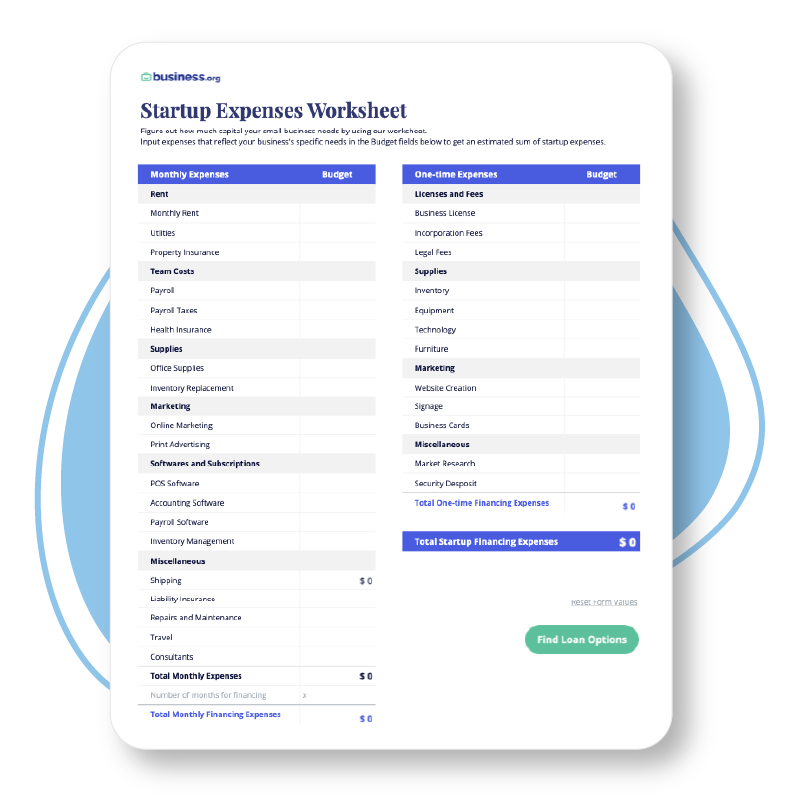
Do you know how much it’ll cost to start your business?
Try our free startup costs worksheet to calculate expenses and estimate how much capital you need to launch.
By signing up I agree to the Terms of Use and Privacy Policy.
LivePlan: Best overall business plan software



Data as of 3/13/23. Offers and availability may vary by location and are subject to change.
*With annual billing
LivePlan has been our favorite business plan software for a while now, despite the stiff competition.
There’s a lot to like about LivePlan. It has pretty much all the features you could want from your business plan software. LivePlan gives you step-by-step instructions for writing your plan, helps you create financial reports, lets you compare your business’s actual financials to your plan’s goals, and much more. And if you ever need inspiration, it includes hundreds of sample business plans that can guide your writing.
LivePlan software pricing
Data as of 3/13/23. Offers and availability may vary by location and are subject to change.
But the best part? You get all that (and more) at a very competitive price. (You can choose from annual, six-month, or monthly billing.) While LivePlan isn’t quite the cheapest business plan builder out there, it’s not too far off either. And if comes with a 60-day money back guarantee. So there’s no risk in trying LivePlan out for yourself.
With a great balance of features and cost, LivePlan offers the best business plan solution for most businesses.
BizPlanBuilder: Most user-friendly


Data as of 3/13/23. Offers and availability may vary by location and are subject to change.
*With annual billing
Need something easy to use? BizPlanBuilder fits the bill.
BizPlanBuilder doesn’t have a flashy, modern user interface―but it does have a very clear, intuitive one. You’ll be able to see your plan’s overall structure at a glance, so you can quickly navigate from your title page to your market trend section to that paragraph on your core values. And as you write, you’ll use a text editor that looks a whole lot like the word processing programs you’re already familiar with.
BizPlanBuilder software pricing
Data effective 3/13/23. At publishing time, amounts, rates, and requirements are current but are subject to change. Offers may not be available in all areas.
BizPlanBuilder also offers lots of helpful guidance for actually writing your plan. It gives you pre-written text, in which you just have to fill in relevant details. It offers explanations for what information you need to include in each section of your plan and way. It even gives you helpful tips from experts, so you’ll have all the information you need to plan like a pro.
So if you want planning software with almost no learning curve, you’ll like BizPlanBuilder.
Wise Business Plans: Best professional service


Data as of 3/13/23. Offers and availability may vary by location and are subject to change.
Unlike all the other companies on this list, Wise Business Plans doesn’t offer software. Instead, it offers professional business plan writing services―meaning someone does all the hard work for you.
Now, you might think that sounds expensive―and you’re probably right (you have to request a custom quote for your plan). But there’s a lot to be said for expertise, and Wise Business Plans has plenty of that. Your business plan will get written by an experienced writer (with an MBA, no less). They’ll get information from you, do their own research, and then write your plan. You get one free revision, and you can always pay for more.
Wise Business Plans service pricing
Data as of 3/13/23. Offers and availability may vary by location and are subject to change.
Your end result will be a polished, entirely original business plan. (You can even get printed copies.) And best of all, you won’t have to spend your precious time working on the plan yourself. Wise Business Plans takes care of all the hard parts, and makes your business look good while doing it. Sounds like a service worth paying for, right?
Put simply, if you want the most professional business plan possible, we recommend using Wise Business Plans’s writing service.
Business Sorter: Best for internal plans

Data as of 3/13/23. Offers and availability may vary by location and are subject to change.
Many businesses need plans to show to people outside the company (to get financing, for example). But what if you just need a plan for internal use? In that case, we suggest Business Sorter.
Business Sorter uses a unique card-based method to help you craft the perfect business plan. (You can watch a demo video to see how it works.) You’ll plan some of the usual things, like finances and marketing. But Business Sorter also lets you make plans for specific teams and team members. It also emphasizes more internal matters, like operations, that might get overlooked in a business plan for outsiders.
Business Sorter software pricing
Data as of 3/13/23. Offers and availability may vary by location and are subject to change.
After you’ve made your business plan, Business Sorter also helps you stay accountable to it. You can create tasks, give them deadlines, and assign them to team members―giving you basic project management tools to make sure your business plans become business actions. (Oh, and did we mention that Business Sorter has the lowest starting prices of any software on this list?)
It all adds up to a business plan software that works great for internal planning.
GoSmallBiz: Most extra features



Data as of 3/13/23. Offers and availability may vary by location and are subject to change.
Want to get way more than just business planning software? Then you probably want GoSmallBiz.
See, GoSmallBiz offers business plan software as part of its service―but it’s just one part of a much bigger whole. You also get everything from discounts on legal services to a website builder to a CRM (customer relationship manager) to business document templates. And more. In other words, you get just about everything you need to get your startup off the ground.
GoSmallBiz software pricing
Data as of 3/13/23. Offers and availability may vary by location and are subject to change.
Don’t worry though―you still get all the business planning help you need. GoSmallBiz gives you business plan templates, step-by-step instructions, and the ability to create financial projections. And if you get stuck, GoSmallBiz will put you in touch with experts who can offer advice.
If you want business planning and much, much more, give GoSmallBiz a try.
Honorable mention software pricing
Tool | Monthly pricing | Learn More |
| $99.00/mo. | Get Started | |
| $19.95/mo. | Get Started |
Data as of 3/13/23. Offers and availability may vary by location and are subject to change.
PlanGuru: Best financial forecasting features

PlanGuru
Starts at$99.00/mo
PlanGuru is pretty pricey compared to our other picks, but you might find its forecasting features worth paying for. It has more forecasting methods than other software (over 20) plus it lets you forecast up to 10 years.
Data as of 3/13/23. Offers and availability may vary by location and are subject to change.
EnLoop: Cheapest tool for startups

EnLoop
Starts at$11.00/mo
EnLoop doesn’t have our favorite features or interface, but it does have really, really low pricing plus a seven-day free trial. It's the most affordable software for startup business planning and still provides all the essential features like financial analysis, team collaboration, charting, and more.
Data as of 3/13/23. Offers and availability may vary by location and are subject to change.
* With annual billing

Whatever happened to . . . ?
Several of our previous favorite planning software, including BusinessPlanPro and StratPad, seem to have gone out of business.
Business plan software 101
A business plan is a written, living document that tells the story of your business and what you plan to do with it. It serves as the source of truth for you—the business owner—as well as potential partners, employees, and investors, but it also serves as a roadmap of what you want your business to be.
Why you need a business plan
While some small-business owners don’t see the point of creating a formal business plan, it can have some concrete benefits for your business. For example, one 2016 study found that business owners with written plans are more successful than those that don’t.1
Still too vague? Then let’s get specific.
If you ever seek business funding (from, say, banks, angel investors, or venture capitalists), you’ll have to prove that your business deserves the money you want. A formal business plan―complete with financial data and projections―gives you a professional document you can use to make your case. (In fact, most potential investors will expect you to have a business plan ready.)
Even if you’re not seeking funding right now, a business plan can help your business. A formal plan can guide your business’s direction and decision making. It can keep your business accountable (by, for example, seeing if your business meets the financial projections you included). And a formal plan offers a great way to make sure your team stays on the same page.
What to include in your business plan
Not all business plans are created equal. To make a really useful business plan, you’ll want to include a number of elements:
- Basic information about your business
- Your products/services
- Market and industry analysis
- What makes your business competitive
- Strategies and upcoming plans
- Your team (and your team’s background)
- Current financial status
- Financial and market projections
- Executive summary
Of course, you can include more or fewer elements―whatever makes sense for your business. Just make sure your business plan is comprehensive (but not overwhelming).
How business plan software can help
With so many elements to include, business plan creation can take a while. Business plan software tries to speed things up.
Most business plan software will include prompts for each section. In some cases, you can just fill in your business’s specific information, and the software will write the text for you. In other cases, the software will give you specific guidance and examples, helping you write the text yourself.
Plus, business plan software can help you stay organized. You’ll usually get intuitive menus that let you quickly flip through sections. So rather than endlessly scrolling through a long document in a word processor, you can quickly find your way around your plan. Some software even lets you drag and drop sections to reorganize your plan.
Sounds way easier than just staring at a blank page and trying to start from scratch, right?
Choosing business plan software
To find the right business plan builder for your business, you’ll want to compare features. For example, would you rather write your own text, getting prompts and advice from your software? Or would you rather go with a fill-in-the-blank method?
Likewise, think about the elements you need. If your plan will have a heavy focus on finances, you’ll want to choose business plan software with robust financial projection features. If you care more about market and competitor analysis, look for software that can help with that research.
You may also want to find business plan software that integrates with your business accounting software. Some plan builders will import data from Xero, QuickBooks, etc. to quickly generate your financial data and projections.
And of course, you’ll want to compare prices. After all, you always want to end up with software that fits your business budget.
The takeaway
The right business plan software can make your life easier. With LivePlan’s wide breadth of features and online learning tools, you can’t go wrong. Plus, BizPlanBuilder's one-time pricing makes it easy to invest while Business Sorter has a low starting cost. And if you're business is looking to grow, GoSmallBiz and Wise Business Plans will scale with you.
But of course, different companies have different needs. So shop around until you find the software that’s best for you and your business.
Now that you've got a business plan, take a look at our checklist for starting a small business. It can help you make sure you have everything else you need to get your startup off to a good start!
Related content
Business plan software FAQ
Creating a business plan can take anywhere from a couple hours to several weeks. Your timeline will depend on things like the elements you choose to include, whether you use software or hire a writing service, and how much research goes into your plan.
That said, much of the business plan software out there brags that it can help you create a fairly detailed plan in a few hours. So if you’re going the software route, that can help you set your expectations.
If you want to get the most out of your business plan, you should update it on a regular basis―at least annually. That way, you can continually refer to it to inform your company’s strategies and direction.
At the very least, you should update your business plan before you start looking for a new round of funding (whether that’s with investors or lenders).
Thanks to business plan software, you can easily write your own business plan rather than pay someone to do it for you. And in most cases, software will cost you less than a professional business plan service.
There are some times you might want to go with a service though. If time is tight, you might find that it’s worth the cost of a service. Or if you’ve got big investor meetings on the horizon, you might want the expertise and polish that a professional service can offer.
Ultimately, you’ll have to decide for yourself whether business plan software or a business plan service will work better for your company.
Methodology
We ranked business plan software and tools based on features, pricing and plans, and connections to project management and other services. The value of each plan and service, along with what it offers, was a big consideration in our rankings, and we looked to see if what was offered was useful to small businesses or just extra. The final thing we looked at was the ease of use of the software to see if it's too complex for small businesses.
Disclaimer
At Business.org, our research is meant to offer general product and service recommendations. We don't guarantee that our suggestions will work best for each individual or business, so consider your unique needs when choosing products and services.
Sources
1. Harvard Business Review, “Research: Writing a Business Plan Makes Your Startup More Likely to Succeed.” Accessed March 13, 2023.

Recent Articles

Choosing an Enterprise Business Internet Provider for Nationwide Coverage
Learn how 5G Fixed Wireless simplifies nationwide business internet deployment with one provider for all...

EarthLink Business Internet Review 2026
Flexible, reliable business internet for small and growing teams. Flexible internet for small businesses Earthlink...
Fiber vs. Cable Business Internet for SMBs
How to choose a reliable internet connection with the uptime your small business needs This...

T-Mobile Business Internet Review 2026
Offers simple 5G business internet designed for small and growing businesses that want fast setup,...



